
- Dexa Scans

Track and optimize your key performance metrics.

Localize and target fat for effective body shaping.

Discover your bone health and take action.

Assess heart disease and stroke risk.
Track and optimize your key performance metrics.
Localize and target fat for effective body shaping.
Discover your bone health and take action.
Assess heart disease and stroke risk.
For many dieters embarking on a weight-loss journey, the scale is treated as the ultimate measure of success. However, focusing strictly on losing weight obscures a critical metabolic blind spot. It is entirely possible to successfully drop a clothing size or maintain a “normal” Body Mass Index (BMI) while still harboring a high percentage of adipose tissue and insufficient skeletal muscle. In clinical practice, this presentation is known as normal-weight obesity (NWO), or colloquially, “skinny fat.”
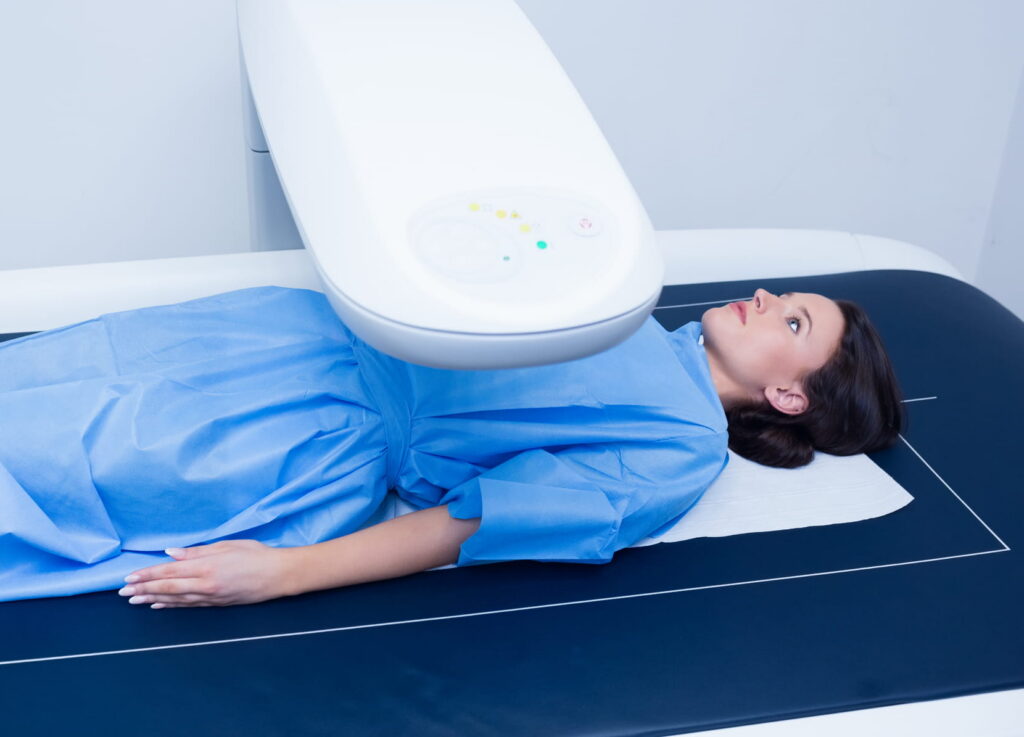
This hidden imbalance often derails standard weight-loss efforts because traditional progress tracking relies on a gross mathematical ratio of height to weight. To bypass these limitations, modern weight management utilizes Dual-energy X-ray Absorptiometry (DEXA). Rather than estimating health and weight-loss success based on surface metrics, a DEXA scan directly quantifies tissue composition, replacing scale guesswork with objective physiological data.
While BMI remains a standard metric within population-level health assessments, such as those utilized by regional public frameworks like HealthLinkBC, its utility drops significantly when evaluating one’s specific metabolic health. By calculating health outcomes based strictly on height and weight, BMI operates under a false assumption: that all mass carries the same physiological risk.
Because this legacy metric remains entirely blind to individual body composition variables, it fails to differentiate between dense, highly metabolic lean skeletal muscle and inert adipose tissue. Furthermore, it treats benign subcutaneous fat beneath the skin identically to dangerous, pathogenic visceral fat wrapped around internal organs.
Consequently, two patients can present with identical BMIs yet possess entirely different metabolic profiles. One cohort may exhibit a highly functional, muscular composition, while other cases face advanced cardiometabolic risks due to muscle wasting hidden beneath high fat accumulation.
True physical transformation is determined by precise tissue architecture, not the total number on a scale. Focusing strictly on weight reduction often masks a critical plateau; if your fat-to-muscle ratio remains unchanged, your metabolic rate drops, stalling your progress entirely. Research consistently demonstrates that tracking the ratio of functional lean skeletal muscle to total fat mass is a far more accurate indicator of body shape, fitness progress, and long-term fat loss than gross weight.
The reference framework below contrasts what legacy BMI misses against the precise biomarkers necessary to optimize your weight-loss strategy:
Health Metric | Legacy BMI Capability | DEXA Diagnostic Resolution | Weight-Loss & Fitness Significance |
Total Body Fat % | None (Inferred by weight) | Direct quantification of adipose vs. lean mass | Confirms if you are actually dropping fat or just losing water weight. |
Skeletal Muscle | None (Wasting goes unseen) | Segmental tracking across limbs and torso | Identifies muscle loss that stalls metabolism and causes weight-loss plateaus. |
Visceral Fat (VAT) | None (Cannot identify organ fat) | Exact gram and volume measurement in abdominal region | Tracks the dangerous, hidden belly fat that is hardest to target with diet alone. |
Lean Mass Balance | None | Left-vs-right symmetry mapping | Ensures resistance training and nutrition are building a balanced physique. |
Unlike consumer-grade bioelectrical impedance (BIA) scales, which rely on highly variable mathematical equations based on daily hydration, DEXA scanning utilizes low-dose, dual-energy X-ray attenuation to physically map body tissue at the pixel level. By passing two distinct energy peaks through the body, the scanner accurately isolates bone mineral density, lean muscle tissue, and adipose mass.
For presentations matching the “skinny fat” phenotype, establishing an objective DEXA baseline provides critical clinical insights to fix a stalled fitness journey:
Many weight-loss programs focus exclusively on reducing scale weight. However, rapid weight loss can sometimes result in losing muscle as well as fat. Losing lean muscle can reduce metabolic rate, decrease strength, and make long-term weight management more difficult.
The goal should be body recomposition: reducing body fat while maintaining or increasing lean muscle mass. Using body composition measurements allows you to:
True progress is ultimately a matter of body architecture, not just the single number on the scale.
A healthy weight doesn’t always mean a healthy body composition. Understanding what’s happening beneath the surface can help you make more informed decisions about your health, fitness, and weight-loss goals.
At DexaCan Kelowna, our DEXA body composition scans provide detailed, evidence-based measurements that go far beyond BMI. As a private DAP-accredited clinic, we make the process simple:
If you’re working toward weight loss, or simply want a more accurate understanding of your health, a DexaCan Body Composition Scan provides the information that BMI can’t. Book your appointment today and discover what your weight is really made of.