
- Dexa Scans

Track and optimize your key performance metrics.

Localize and target fat for effective body shaping.

Discover your bone health and take action.

Assess heart disease and stroke risk.
Track and optimize your key performance metrics.
Localize and target fat for effective body shaping.
Discover your bone health and take action.
Assess heart disease and stroke risk.
Understanding body composition involves more than weight or body mass index (BMI). Where your body stores fat can also provide useful information about metabolic health. Visceral adipose tissue (VAT) is fat stored deep within the abdomen, surrounding organs such as the liver and intestines. Higher levels are associated with an increased risk of insulin resistance, type 2 diabetes, and cardiovascular disease.
A DEXA (Dual-Energy X-ray Absorptiometry) body composition scan can estimate visceral fat alongside total body fat and lean tissue. But what is a healthy VAT score, and how can this measurement help you understand your metabolic health? The answer depends on how your results are reported and how they fit into your broader health profile.
Visceral fat surrounds internal organs, unlike subcutaneous fat, which sits just beneath the skin. Although some visceral fat is normal, excess accumulation is associated with changes in inflammation, insulin sensitivity, and blood glucose regulation.
Higher visceral fat levels have been linked to several metabolic health concerns:
However, visceral fat is only one part of metabolic health. Genetics, age, physical activity, diet, family history, and other medical factors also influence diabetes risk. A VAT measurement cannot diagnose diabetes or predict an individual’s risk on its own.
DEXA uses low-dose X-rays at two energy levels to estimate bone mineral, fat mass, and lean tissue throughout the body. Certain DEXA systems also use software to estimate visceral adipose tissue within the abdominal region, distinguishing it from subcutaneous fat.
Depending on the scanner and software, a body composition report may include:
These measurements provide more detail about body composition than weight alone. However, DEXA estimates visceral fat rather than directly measuring insulin resistance or blood glucose levels.
There is no single VAT score that is considered healthy for everyone. DEXA systems may report visceral fat as estimated mass, volume, or area, and reference ranges can vary depending on the scanner, software, and population used for comparison.
Your result should therefore be interpreted using the reference information provided with your scan rather than an unrelated online threshold.
When reviewing your VAT score, consider three important factors:
Higher VAT levels are generally associated with less favourable metabolic health, even in some people whose overall body fat percentage is not particularly high. However, a single score cannot determine whether you have diabetes or establish your individual risk of developing it.
The goal is not to achieve the lowest possible number. It is to understand your result in context and use it, where appropriate, alongside other health assessments.
Research suggests that visceral fat measurements can provide information about metabolic health beyond body weight alone.
A 2015 study published in the European Journal of Clinical Nutrition examined DEXA-measured VAT in 229 women with obesity. Higher VAT levels were associated with impaired glucose tolerance and metabolic syndrome, suggesting that visceral fat measurements may help identify metabolic risk factors.
However, the study focused on women with obesity, so its findings should not automatically be generalized to everyone. VAT is an indicator associated with metabolic risk, not a standalone diabetes test.
Visceral fat levels are influenced by genetics, age, hormonal changes, physical activity, diet, sleep, and long-term energy balance. These factors vary between people and help explain why individuals with similar body weights can have different amounts of visceral fat.
Understanding these influences can help you identify realistic opportunities to improve your body composition and metabolic health. A higher VAT result does not necessarily mean someone has an unhealthy lifestyle, nor does it guarantee that a particular intervention will produce a specific result.
If your VAT measurement is elevated, sustainable lifestyle changes may help reduce excess visceral fat and improve overall metabolic health. Depending on your circumstances, useful strategies include:
Results vary, and no single approach guarantees a particular VAT score. Repeat DEXA scans can help monitor changes in body composition, particularly when the same scanner and comparable measurement conditions are used.
If you are concerned about diabetes risk, speak with your healthcare professional about whether fasting blood glucose or HbA1c testing is appropriate. These tests assess blood glucose regulation in ways a VAT measurement cannot.
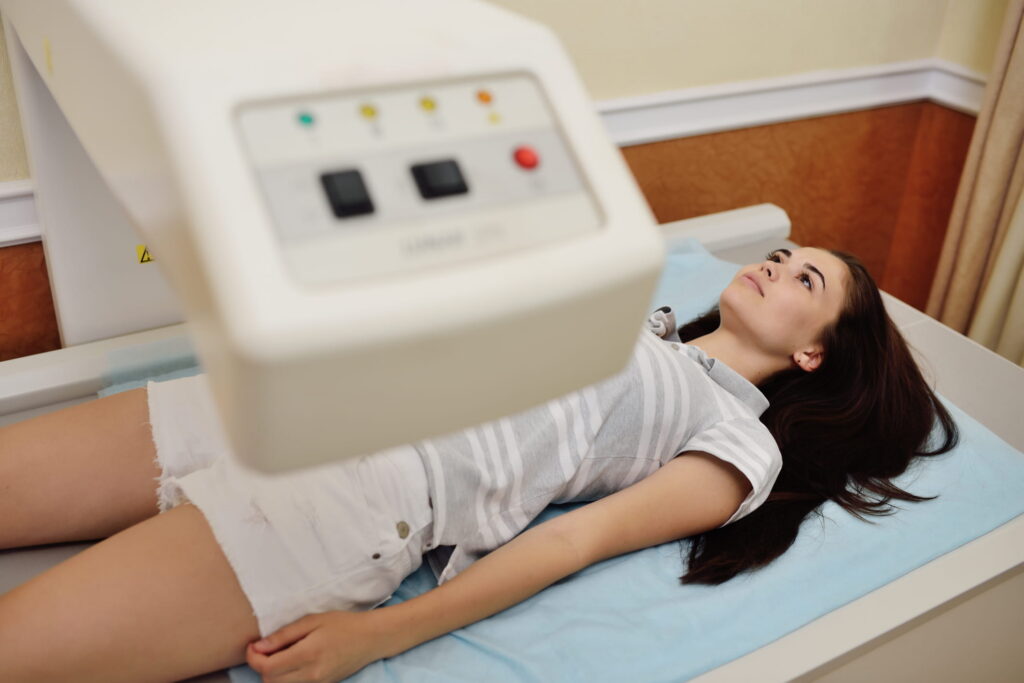
A DEXA body composition scan can provide information about estimated visceral fat, total body fat, lean tissue, and regional fat distribution. These measurements can help establish a baseline and monitor changes over time.
DexaCan offers private DEXA body composition scanning in Kelowna. Book your DEXA body composition scan with DexaCan to gain a clearer understanding of your body composition.