
- Dexa Scans

Track and optimize your key performance metrics.

Localize and target fat for effective body shaping.

Discover your bone health and take action.

Assess heart disease and stroke risk.
Track and optimize your key performance metrics.
Localize and target fat for effective body shaping.
Discover your bone health and take action.
Assess heart disease and stroke risk.
Osteoporosis is often associated with women, but men can develop bone loss as they age. In fact, at least one in five men will experience a fracture related to osteoporosis during their lifetime.
The challenge is that osteoporosis usually develops without obvious symptoms. A man can feel healthy, stay active, and have no indication that his bone density is declining until a fracture occurs.
For men over 60 in Kelowna and throughout the Okanagan, understanding when a DEXA scan may be appropriate can be an important part of proactive bone health.
A DEXA (Dual-Energy X-ray Absorptiometry) scan is a low-dose X-ray examination used to measure bone mineral density. It can help identify low bone density and assess fracture risk before a serious injury occurs.
Men typically experience slower bone loss than women, but age-related bone loss can still increase osteoporosis and fracture risk later in life. Because early bone density loss causes no physical symptoms, identifying key risk factors is essential to proactive health management.
Primary clinical risk factors for male osteoporosis and fractures include:
Recognizing these indicators helps determine whether objective bone density testing is clinically appropriate.
There is no arbitrary age when every man automatically needs a bone density scan. Instead, modern preventative care relies on a combination of age and individualized fracture risk profiles.
According to the 2023 Osteoporosis Canada Clinical Practice Guidelines, Bone Mineral Density (BMD) testing is recommended for:
For men in their 50s and 60s, the decision to get a DEXA scan should not depend on age alone, but on a comprehensive evaluation of personal health history and metabolic risk factors.
A DEXA scan is only one part of maintaining strong bones as you age. Regular physical activity, strength training, balance exercises, and adequate nutrition all support healthy aging and long-term mobility.
Key habits to support bone strength include:
While lifestyle habits lay the foundation for bone strength, a DEXA scan is the only way to objectively measure whether those efforts are working.
A DEXA scan is a quick, non-invasive examination that measures bone mineral density, typically focusing on the hip and spine.
During the scan, you lie comfortably on a padded table while the scanner passes over your body. The process takes only a few minutes, involves no injections, and uses a very low dose of radiation.
A comprehensive DEXA report evaluates:
At DexaCan Kelowna, DEXA bone densitometry is available as a private, non-invasive diagnostic service with no GP referral required.
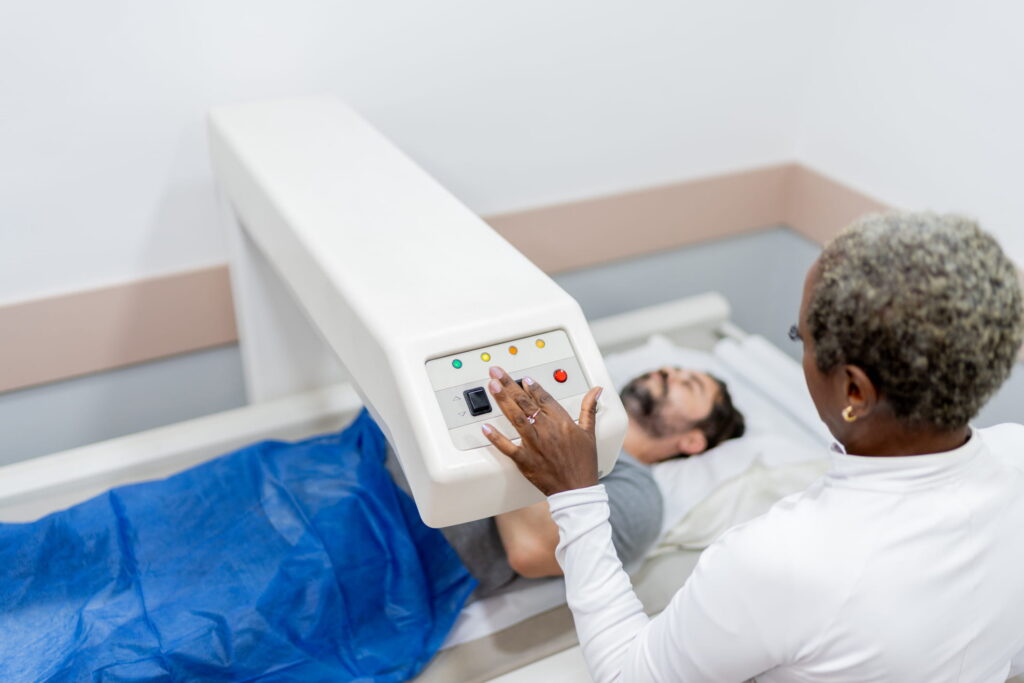
Bone loss can happen without warning signs, which is why understanding your individual risk matters. For Okanagan men, a DEXA scan may provide valuable information about bone density and future fracture risk, particularly when other risk factors are present.
DexaCan provides private DEXA bone densitometry in Kelowna, with no referral required. The scan is designed to provide detailed information about bone density that can help support informed decisions about bone health. Book your DEXA scan with DexaCan today and take a proactive step toward protecting your bone health.